
Issue 1
We live in an age of technological wonder which has not existed in the 6,000 years of the history of this earth. This is a direct result of the gospel and the peace which it brings, and therefore we should be grateful for it. But it only makes things easier for us—it makes it easier for us to further the Kingdom, and it also makes our attempts to destroy it more effective. This is not something which the church seems to have realized. We have embraced technology with eagerness, applying it to every aspect of our worship. Some folks resisted the change, and to this day there are dissenters within the ranks of church congregations all over the nation, though as I have discovered, many people have little to no idea what they would rather do instead. All they know is that the technology has been misapplied.
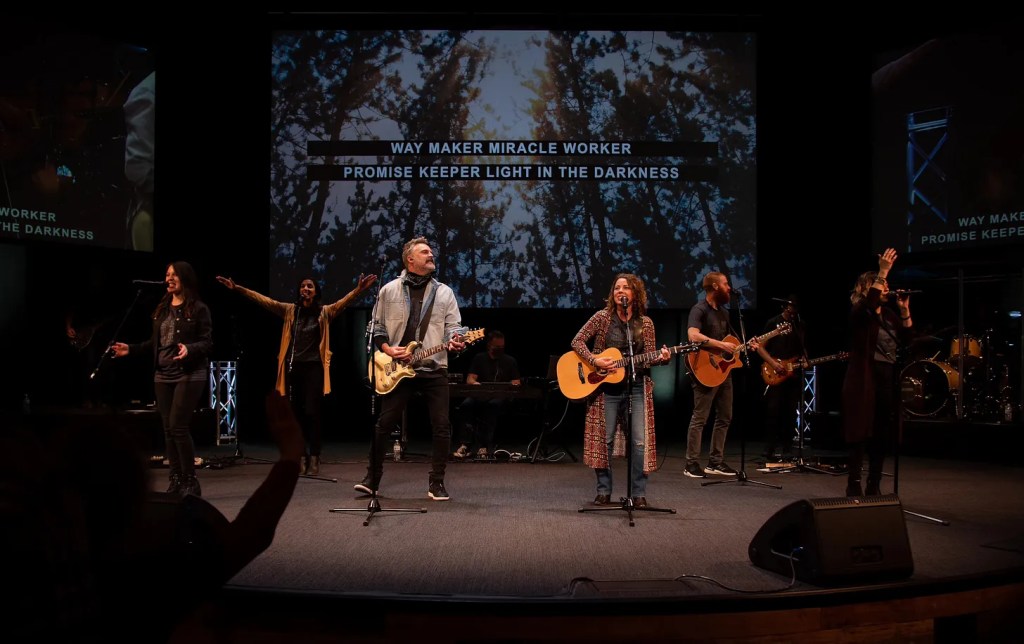
Thus we have our contemporary worship band, with its smooth words and soft chords and catchy beats. While I do not think that a band by itself is evil, I certainly am of the opinion that it is misapplied to congregational worship. In my experience, most people take the strategy of pointing at various aspects of the band instead of complaining of its existence in the church in the first place.
Common Objection 1: The music is too loud.
Most certainly, yes. The music is too loud. But Biblically, this should not be our complaint. Shouting with a loud voice in the worship of the Lord was a common and worthy practice (2 Samuel 6:15, 1 Chronicles 15:28, 2 Chronicles 15:14, Ezra 3:11-12, Esther 8:15, Job 8:21, 38:7, Psalm 27:16, 33:3, 35:27, 47:1, 65:8 and 13, 66:1, 71:23, 81:1, 89:12, 95:1-2, 98:4 and 6, 100:1, 105:43, Isaiah 24:14, Zephaniah 3:14.) There are many other verses to point to. When I began to lead Psalm and hymn sings at my home, some of the older women in my church subtly made mention of how they would rather sing something quieter. But these same women never complained of volume at church. It was the other hymn-loving side who complained about the volume at church who didn’t complain about the volume at my house. Obviously, this is not the main issue.
Furthermore, lest we say that it just be our voices which should be loud, look no further than Chronicles, where David the great Psalmist has established a musical literacy in the worship of the Lord in Israel. 1 Chronicles 13:8, 15:16-28, 16:5, 16:42, and 25:1-6 all mention loud sounding instruments used in worship. And this is just 1 Chronicles, not to mention numerous Psalms and other places in Scripture where worshiping loudly with instruments is presented in a good light by the Author of Scripture.
With this in mind, we should not mindlessly complain about volume when, according to scripture, volume is a good thing. We should indeed complain about how volume is obtained, however.
When a church pours forth overpowering undertones from the bass speaker on Sunday mornings such that you cannot hear your brother singing in front of you, nor yourself even if you tried, we should be highly suspicious of what is being glorified and how it is being glorified. Words matter. God did not create the world by thinking it into being. He spoke it into being—Psalm 34:6: “By the word of the Lord the heavens were made, And by the breath of His mouth all their host.” Similarly, we should sing aloud. Some small-minded people have told me that it is just fine if you can’t hear your neighbor singing; it is what is poured forth from their heart which matters. Wrong again. Worship to the Lord is meant to be given aloud with real words and real sound waves (Psalm 77:1, 132:16, Isaiah 12:6, and Jeremiah 31:7 to mention a few).
Knowing this, we should ask ourselves what a Biblical mindset to worship has us prioritizing. Should we primarily hear instruments as is the current state of affairs, or should we hear voices, or should we reject the idea of one being more important over the other? Maybe since the Lord wrote us an entire inspired book of songs to sing to Him, we should reference it for this question.
In the Psalms, there are 72 references made to singing, 29 to our voices crying aloud to the Lord, and 43 to the voice—either our own or the Lord’s. However, there are only two references to cymbals, eight to instruments, ten to the harp, and 13 to the lyre. I am not advocating that we take a purely statistical approach to Biblical exegesis, but there is something to be said for the attention paid to the human voice over the instruments, which attend the voice as secondary functions to worship. Therefore, instruments, while good things to have in worship, are not necessary to its function.
While I will dig into the basic theology of congregational worship in another section, this should catch our attention. Congregational worship to God without voices is not congregational worship. Neither is a worship service where the band is heard primarily over the congregation. In this case, indeed the volume of the music does need turned down. But when this is accomplished, it reveals that the mere volume of the music was not the only issue at play.

 Worship Reformation
Leave a comment